Life Death and Resurrection
Life, Death, and Resurrection
A North Texas Road Trip
A few weeks ago, I went to a funeral up in Paris, Texas. If you’ve never been to Paris, it’s situated about an hour North of nowhere on the Northeast Texas plains. Even though it’s only a two-hour drive from my place, I left four hours early, partly because of the dicey weather and partly because the untrustworthy transmission in my fifteen-year-old truck Also, if all went well, I was meeting a friend there for lunch prior to the service.
On The Road Again
I headed East out of Garland on the presidential loop that circumnavigates the alive-and-well suburbs surrounding the dying concrete jungle of Dallas. The loop was eight lanes of wide-open concrete with minimal traffic. Even though I was traveling close to 90mph, I was only keeping up with the traffic around me and would occasionally be passed by a teen-age driver.
When I exited on I-30 East, I encountered the opposite extreme. I-30 is a long-decayed roadway in the midst of being resurrected via copious construction zones. For at least ten miles, I was stuck in a two-lane gauntlet bordered tightly by three-foot concrete walls and at least half filled with eighteen-wheelers. I began to wonder if I might not be the centerpiece of the next funeral.
After I passed Bucees, that roadside Cathedral of Capitalism, things thinned out. But even Bucees reminded me that there’s a cycle to life. They’re on the upside curve of life’s sinewave while their predecessor, Stuckeys — the original weary traveler’s money magnet — has long since passed away with no real hope of resurrection.
Little Town on the Prairie
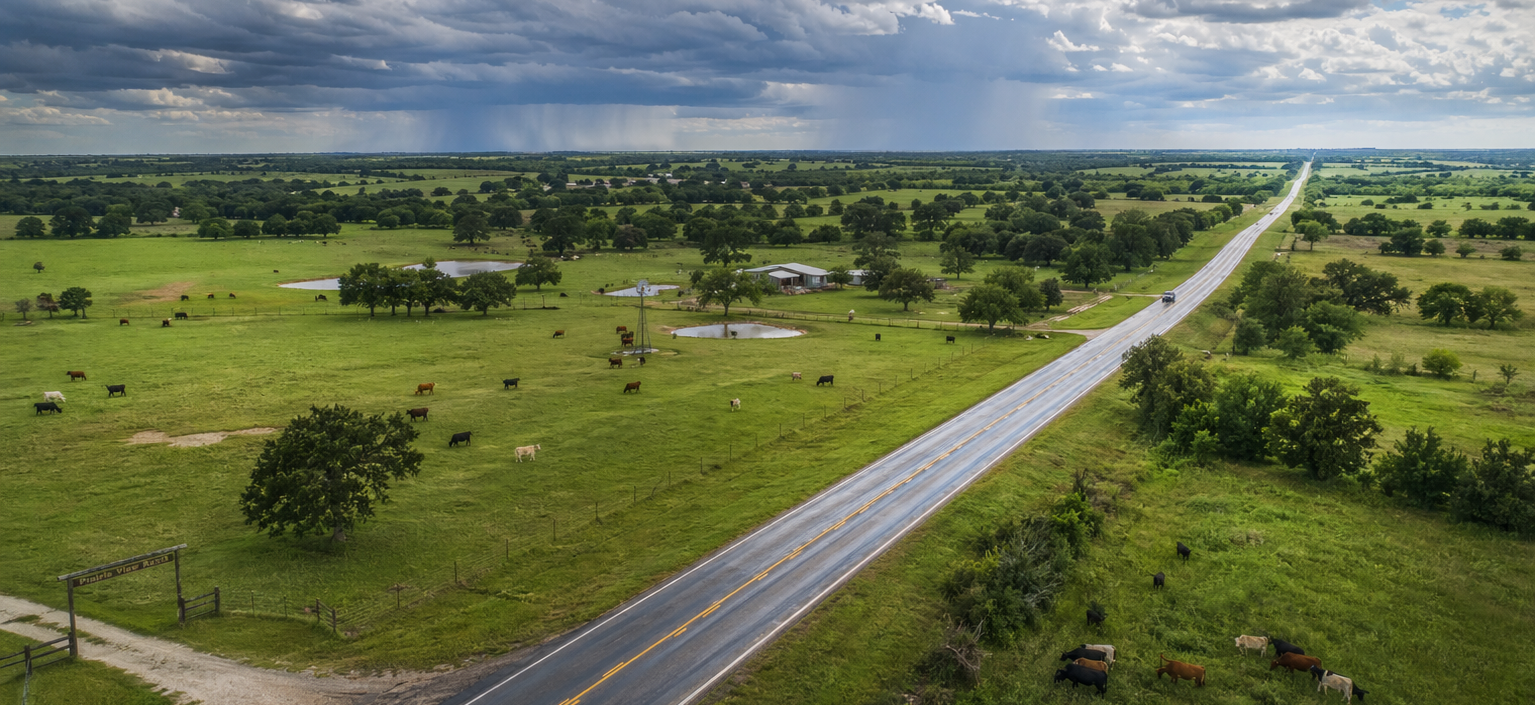
Once I exited the Interstate deathtrap, things took a turn for the better. What used to be thousands of acres of cotton, is now broken into small family-owned parcels, primarily focused on raising modest herdlets of cattle. That’s because the once thriving North Texas cotton industry succumbed to their own version of AI almost a century ago.
The initial calamity followed the invention of synthetic fibers, those longer-lasting threads that made our clothes less expensive and even less comfortable, all while killing off an entire industry and way of life. The second bane of cotton was North Texas’ anti-agriculture weather — twisters that cut a gash through the crops like a box cutter slashing a museum-quality oil painting.
None-the-less, the current status provides a scenic drive on highway 24 all the way to that little town atop the prairie. The city that once thrived and then nearly died, seems to be resurrecting itself. Downtown Paris is a hub of refurbished buildings nestled between a few outliers that nobody has the heart to burn down.
Anyone emigrating to Paris from the left coast would have a heyday, having sold their 900 square foot residence in San Francisco for a couple million dollars and discovering that a refurbished historic 3,000 square foot Victorian mansion in Paris is available for only $400,000.
And the housing isn’t the only pleasingly priced commodity. My friend, Russell, and I ate lunch at a downtown café, housed in a repurposed 1940’s brick building. The lunch special, which included a generous portion of chicken fried steak, two vegetables, bread, desert, and a drink, set us back only $10 apiece. Actually, lunch set Russell back $20 because he graciously paid for both our meals.
A life Well Lived
After a lunch that made me especially sleepy, we finally made it to the funeral service, and what a service it was. If you’re my age, you’ve likely attended a few too many funerals, all of which were vaguely depressing and few of which offered any tangible encouragement. This one was the rare exception.
Our friend, Shon’s mother was nearly 96 when she passed. She’d spent much of her life in Paris, riding that sinewave of existence through life, death, and yep, resurrection. Both of Shon’s parents were born on the heels of the great depression — a catastrophe that decimated worldwide economies and brought about more suffering than modern cultures had ever known. But even more suffering was yet to come.
World War 2 followed closely, rendering death and destruction beyond the scope of any prior event. It left almost no family untouched by the death of a loved relative or dear friend. Even in the midst of death, people like my friend’s parents preserved life. They married, got jobs, raised families, and scraped by. In short, they resurrected our culture.
Mary Jane Cass’s life was a testament to that perseverance. She raised a family that went on to provide her with ten grandkids and thirteen great-grandkids (a fourteenth “great” is about to be born even as I write this story). The woman did her part, not only to revive the American culture, but to repopulate the planet with well-balanced, productive offspring.
So maybe the next time you’re feeling victimized by politics, religion, or life in general, perhaps you should take a daytrip up old state highway 24 and witness the cycle of life for yourself. If you’re as impressed by it as I was, call my friend Russell. He owns a bed and breakfast in the heart of all that reborn real estate. Maybe he’ll put you up overnight.
 Let’s talk. I’d really like to hear what you have to say, and it might even give me something to write about. Email me at guy@lawsoncomm.com.
I’ll buy you coffee and we can compare notes. I promise not to steal your ideas without permission.

There are far, far better things ahead than any we leave behind.
— C.S. Lewis

Did someone forward this newsletter to you after reading it themselves? Don’t settle for that!
CLICK HERE
to get a fresh, unused copy of this newsletter sent directly to you every Sunday morning. If you decide it stinks, you can always unsubscribe.

How Should We Then Live?
— Francis A. Schaeffer
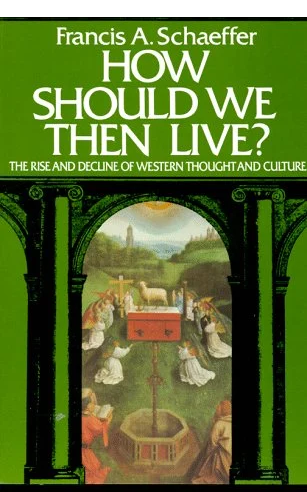
I initially encountered this book back in 1976 when it was first written. Originally subtitled, “The Rise and Decline of Western Thought and Culture”, it traces the roots and dilution of what Schaeffer saw as a Biblical worldview in Western culture. He argues that ideas have real consequences for societies. After fifty years, his predictions about our culture have all come true. If someone’s ideas are that prophetic, maybe his book deserves another look.
A meeting of great minds who think alike