SEEDS

SEEDS
In 1974, I heard an astute speaker posit that the seeds of any organization’s demise can be discovered within that organization’s foundation.
While I didn’t immediately grasp the nuances of his claim, I did at least understand the principle. And fifty years later, I must admit that his observation was more correct than any other concept I’ve ever pondered.
For half a century, I’ve worked as a consultant to corporations, churches, non-profits, public school districts, and municipal governments. Some were destined for success, and some were slated for eventual implosion, but the seeds of those outcomes have always been as clear as day and night. In fact, that same principle extends from individuals, all the way up through federal governments.
On the surface, the pursuit of profits might appear to be the driving force, but profits are only the surface indication that something is afoot. Money is not the issue. The seeds of failure or success are planted much deeper with farther-reaching roots.
Motive is the issue. The difference between a company offering a valuable product or service and reaping the market-driven profit to benefit their employees and grow the business, versus an organization offering products and services merely as a guise to gain their coveted slice of the American pie is no less different than the hour before sunset and the hour after.
The folks I’ve worked for and, in some cases, still work for, have existed in a space that hovers on either side of that line. None have been completely altruistic, and none have been totally self-serving. What I can avow is that the more you get to know an organization (or person), the more obvious the fruit of those seeds becomes. Some, you develop immense respect for. Others….
What then of my own motives? If my internalized greed or envy causes me to misjudge the success of another — regardless of their intent — by viewing their success through the lens of my own shortcomings, do I not have to rationalize my deficient thinking by inventing the concept of “unfairness”?
What then of our nation? And what shall you and I do — mend the cracks or accelerate the demise? Perhaps we should employ prudence lest we obtain that which we deserve.


What you are stands over you the while, and thunders so that I cannot hear what you say to the contrary.
— Ralph Waldo Emerson
 Let’s talk. I’d really like to hear what you have to say, and it might even give me something to write about. Email me at guy@lawsoncomm.com.
I’ll buy you coffee and we can compare notes. I promise not to steal your ideas without permission.

The Elephant in the Brain: Hidden Motives in Everyday Life
— Kevin Simler and Robin Hanson
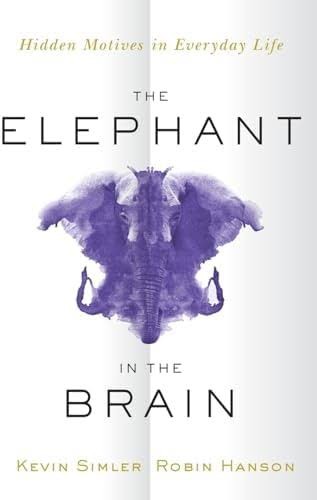
Simler and Hansen provide an objective examination of how we rationalize our own motives to ourselves while criticizing the motives of others. It’s not a light read, partly because it causes the reader to confront their own flawed humanity, and partly because it’s a clinical book directed at causes, not solutions. My friend Russell, will like it because the audio version is ten hours long and will fill up several days of his daily commute.

Did someone forward this newsletter to you after reading it themselves? Don’t settle for that!
CLICK HERE
to get a fresh, unused copy of this newsletter sent directly to you every Sunday morning. If you decide it stinks, you can always unsubscribe.
A meeting of great minds who think alike