Ignition
The Lowly Ignition Condenser
When I was a young buck, I learned to work on single-cylinder go-kart engines. Then, I graduated to motor scooter and finally to motorcycle engines. They all had one thing in common; they received their “spark” from a magneto system where perfectly placed magnets in a spinning flywheel, generated power to the spark plugs.
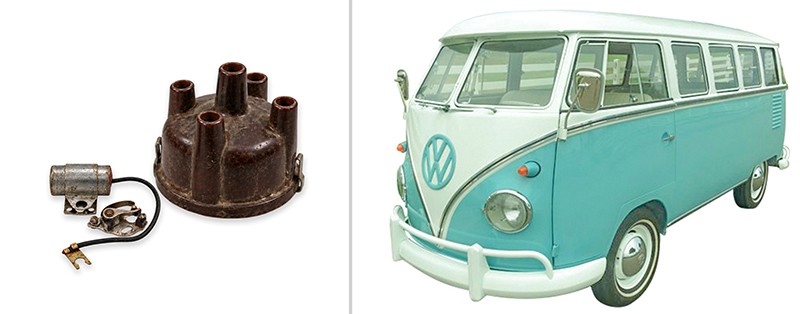
In the Spring of 1971, I bought my first car, a 1961 Volkswagen Van with a four-cylinder engine and an entirely different ignition system. Like other automobiles of its day, the VW had a distributor cap receiving power from the alternator and distributing that power in perfect timing to each of the successive cylinders.
Inside that distributor, there was a gap switch call the “Points” which was triggered by a spinning cam. Those points had to be adjusted to the perfect position so each cylinder would receive spark at the instant of maximum compression and generate a small, controlled explosion to keep the crankshaft turning.
When you consider that the engine averaged about 1,500 RPM, that’s all four cylinders firing fifteen hundred times a minute — creating lots of wear on those points. To help mitigate burning of the points, the distributor also contained a condenser (nothing more than a glorified capacitor) to break the circuit and resupply maximum current as the points cycled through open and closed positions.
It took me a while to get the hang of adjusting the points with the cam in perfect position but once I did, that old VW purred like an alley cat with a stolen bowl of milk.
But the VW engine isn’t specifically what I wanted to talk about. That condenser was the thing of beauty. Even though it had cycled no telling how many hundreds of thousands of times during its life, it was still useful following replacement, especially to a kid who appreciated the value of a good prank.
If you clamped one side of your jumper cables to the body of the condenser, and just quickly and lightly tapped the other cable to the connector. You could charge that little demon. And if you held it carefully by the insulated wire, never touching both body and connector at the same time, you could toss it to your older brother who would catch the whole thing in his open hand, resulting in a most pleasing electrical shock to the recipient, and the need for you to haul ass out of his range before he recovered.
But I diverged again! The real issue is that the condenser had a lengthy and useful life as long as it was receiving power from somewhere else but the minute it relied on itself or lost input, that condenser was just rusty metal.
You and I are exactly like that condenser. We can tell ourselves all day long that we’re good people and care about others. We can even believe that tall tale right up to the minute some jerk cuts us off in traffic. If we are not receiving spiritual input from outside the normal realm of existence, we might as well be a condenser trying to suck energy off the spark plugs instead of vice-versa.
And don’t try giving me the trite excuse that modern humans are like modern cars run by more sophisticated ignition systems no longer in need of condensers. We’re not cars. Three million years of “Me First” evolution has resulted in burnt out humans with almost nothing left to offer their fellow anthropoids. We’re due for a tune-up.

You don’t ever have to do anything sensational in order to love or to be loved.
— Fred Rogers, Marquette University commencement address, May 2001.

 Let’s talk. I’d really like to hear what you have to say, and it might even give me something to write about. Email me at guy@lawsoncomm.com.
I’ll buy you coffee and we can compare notes. I promise not to steal your ideas without permission.

The Art of Encouragement: How to Lead Teams, Spread Love, and Serve from the Heart
— Jordan Montgomery (2024)
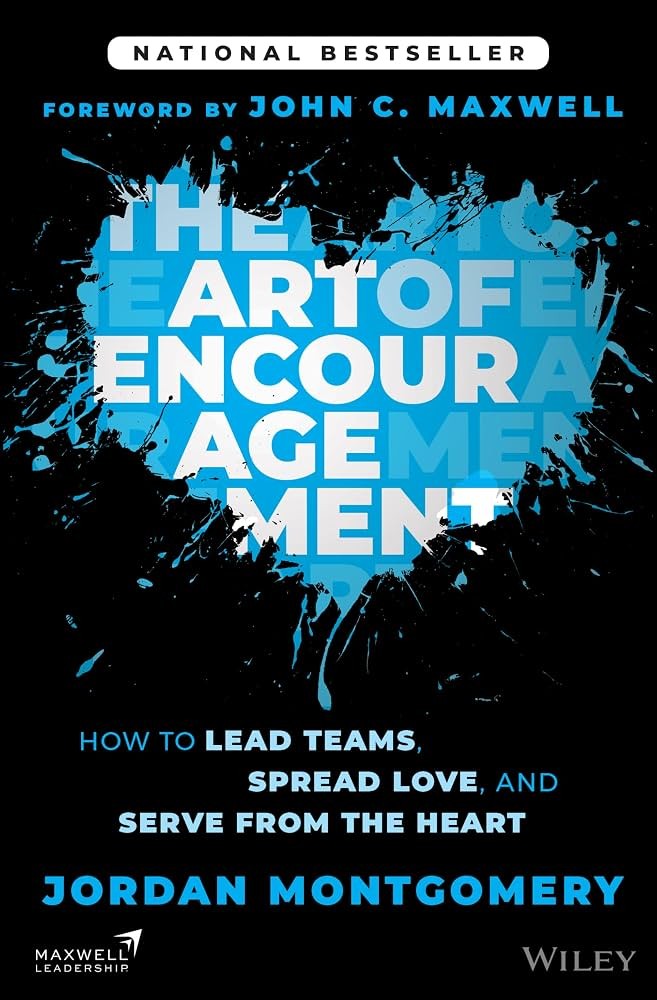
At some point, I kind of lost a taste for business books because, as my friend Perry said, they all give you five principles for getting more work out of the people around you. This one is different. It’s about learning to genuinely care for people where they are — productive or not, likable or not, useful or not. It’s about assigning value to people simply because of their humanness, not their politics, or religion, or intellect, or sex appeal.

Did someone forward this newsletter to you after reading it themselves? Don’t settle for that!
CLICK HERE
to get a fresh, unused copy of this newsletter sent directly to you every Sunday morning. If you decide it stinks, you can always unsubscribe.
A meeting of great minds who think alike