Social Evolution
Social Evolution
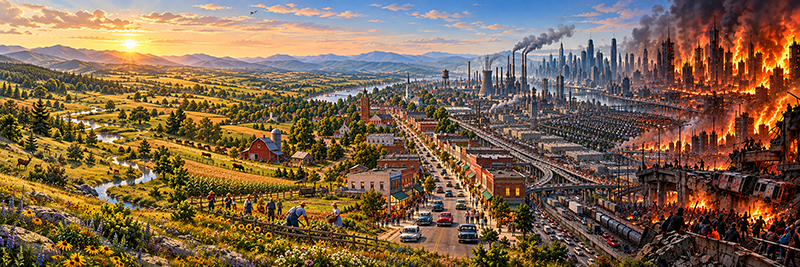
The history of my hometown is a miniaturized version of the history of America, which in turn, represents an abridged mimeograph of the story of all man — people arrived here seeking something better than whence they fled.
This is not the romanticized version of well-meaning yet emotionally skewed historians, each with a need to validate their individual experience. It’s a story as old as mankind and it’s likely similar to the story of your hometown.
Darwin misinterpreted the crux of it. Our three-million-year ascent from the swampy soup to structured society was never about the survival of the fittest but rather about the survival of the unabashedly self-serving — those adept at bending their environment to profit themselves, and then passing on that trait to their offspring.
Hometown History
First came the agriculturalists because food is the original necessity. Anyone can be a farmer in this natural incubator we inhabit — the soil, the atmosphere, and the seasons were specifically designed for the proliferation of all things organic.
But not everyone can be a successful farmer, patiently analyzing the subtleties of their surroundings and diligently molding the elements to maximize the growth of onions, cotton, beans, and corn — the early staples of my hometown. We were lucky.
Then, came the industrialists to improve the plowshares, gin the cotton, invent the implements of progress, and furnish the great innovations of transportation. Commerce and industrialization flourished in my hometown. And with them, they sprouted their own needs for plentiful energy and a hungry workforce.
About that same time, came the mercantilists to supply the necessary conveniences. They hawked readily available implements of work and home life — tools, cooking and cleaning goods, clothing and furniture. They even imported kits to construct ready-made homes.
With all that commerce, came the need for the arbitrators and keepers of order — civil governments, public education, doctors and lawyers. They molded the growing populace into a cohesive unit, smoothing over the social abrasions that naturally arose from too many individuals in a confined space.
Finally, came the refiners – entertainers, churches, civic and political groups dedicated to bending the path of the social river to enhance their own status — dams to harness the power of the majority, levees to redirect the flow of prosperity, cultural irrigation projects to siphon off and reassign useful assets.
Wherever abundance blooms, it’s followed closely by the shysters, con artists, politicians, and leaches who seek a shortcut to carving off a piece of the goods for their own consumption.
They are not the demonic ogres of our nightmares. They are us — you and I — but with a genetically enhanced propensity for valuing profit above morality. At the end of the day, our fear of them is rooted in the knowledge of how thin the wall separating their character from our own has become.
Each group bumped roughly against the others, learning to compromise, accommodate, and pacify in order to cultivate the shortest route to their mutual successes. But like all of nature, entropy reigns and the groups slowly began to let their intrinsic fear define them as victims. They soon took offense at the anomalies exhibited by those outside their unique herds.
For the last hundred years, the herd mentality has evolved and grown into an unhealthy intolerance of anything remotely unlike the mother herd — an intolerance boosted by the notion that we have somehow become the targets of the unrighteous offenders.
We even have vocabulary police to warn against politically incorrect word usage which might offend the linguistically sensitive. We strive mightily to stamp out anything deemed “offensive” by the herd as it cannot be tolerated in our utopian pasture.
The real problem is that there’s no new frontier to populate in an effort to escape the maddening and tyrannical pseudo-standards. I’m not sure what the solution might be, but chaos is bound to prevail before sensibility reigns again. Until then, stock up on what my old friend, Steve Knagg, called the four “B”s — beer, beans, biscuits, and bullets.
See you on the other side, hopefully.

A Democracy…can only exist until the majority discovers it can vote itself largess out of the public treasury.
— Alexander Fraser Tytler
 Let’s talk. I’d really like to hear what you have to say, and it might even give me something to write about. Email me at guy@lawsoncomm.com.
I’ll buy you coffee and we can compare notes. I promise not to steal your ideas without permission.

The Upswing
— Robert D. Putnam and Shaylyn Romney Garrett
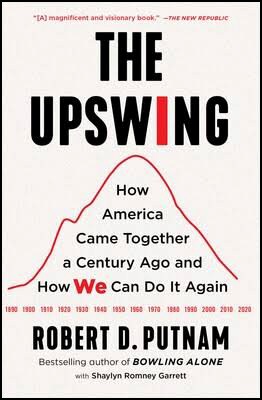
Putnam is a political scientist and researcher who’s been writing since the early 90’s. His primary premise in this short book is that America’s strength grows when our individual ambition is balanced by our responsibility to others — and weakens as that balance shifts toward self-interest. He’s best known for his views on community strength through relationships. It’s a pretty academic approach so don’t get your political feathers pre-ruffled even if it is political animosity season.
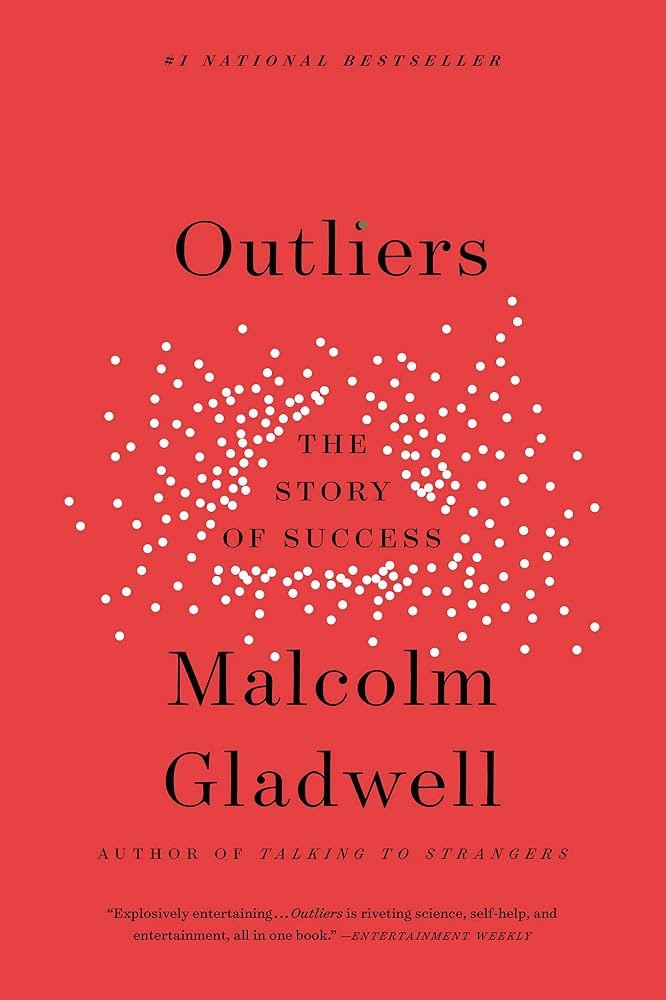
Outliers
— Malcolm Gladwell
You don’t even need to read this whole book. Just read the intro section about the people of Rosetto, Pennsylvania. It’s the ultimate story of a society that works and the benefits of participating in such a society. Then, stop and mentally compare a society like that with the one we currently inhabit. You’ll have a good starting point for implementing repairs.

Did someone forward this newsletter to you after reading it themselves? Don’t settle for that!
CLICK HERE
to get a fresh, unused copy of this newsletter sent directly to you every Sunday morning. If you decide it stinks, you can always unsubscribe.
A meeting of great minds who think alike