STRIFE

STRIFE
On a recent Tuesday, America celebrated its biennial National Day of Strife. The two dominant political parties rallied their faithful sheep, sharpened their accusatory weapons, and battled for the prize of dominance.
As usual, the victors preened, strutted, and proclaimed the “validation” of their worldview while the losers licked their wounds, questioned the integrity of the election process, and vowed to undermine the victor’s plans.
Every two years for most of my life, that same monotonous dance has repeated itself with interchangeable winners and losers, and only one thing has significantly changed — the reactions have become more exaggerated.
When I was younger, people rarely cared or asked what political party their neighbors, friends, or even their spouses followed. Today, the wrong answer to that question can get you expelled from social groups, booted from your job, and disinvited from family gatherings.
What changed?
Over the last half century, our mode of thinking began to shift. The change was stealthy but steady and it was more destructive than any conflict mankind has ever experienced.
Our culture began to transition from a understanding that truth is an absolute which can be discovered, to seeing it as a relativistic concept which can be redefined by our fragile egos lest it cause us discomfort.
That departure from rational thought got a huge boost during the early Twenty-first Century. The primary driver was social media where the validity of assertions was measured not by factual evidence but by the number of “likes” they received. We began to join groups that would bolster our emotion-based beliefs.
In short order, the national media recognized their looming obsolescence and did what any business would do. They shifted their traditional emphasis to meet market demands … but when your core product is objective reporting of facts, market influences have a way of distorting those very facts in order to appease your audience.
Sometime around the COVID pandemic, we surrendered fully to the consensus-based notion of truth, and anyone who disputed the consensus of our herd became a threat to our personal peace and prosperity. Petty disagreements became struggles for dominance because empirical evidence could no longer definitively resolve them. Majority opinion now rules supreme.
Consequently, we’ve become so obsessed with protecting our herds that we’ve lost the ability to collaborate and address shared problems. Those common threats are real — ranging from an angry despot initiating a nuclear Holocaust, to the unforeseen consequences of missteps in our explorations of genetics and artificial intelligence.
Given the current political climate, it probably won’t be long until we simply take up arms against each other. Unless we find a way to revive rational thinking and recognize that reality exists independently of our herd preferences, we might just be headed the way of the dinosaurs without ever seeing what’s coming.
But then again, the confusion of relativistic thinking, along with the strife and violence it spawns, could just be nature’s means of preventing the run-away growth of a self-serving species.

A man was meant to be doubtful about himself, but undoubting about the truth; this has been exactly reversed.
— G.K.Chesterton
 Let’s talk. I’d really like to hear what you have to say, and it might even give me something to write about. Email me at guy@lawsoncomm.com.
I’ll buy you coffee and we can compare notes. I promise not to steal your ideas without permission.

Here and Now
— Henri Nouwen
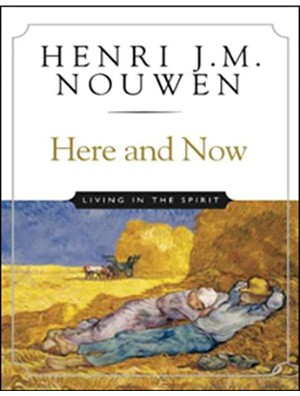
I recommended this book a few weeks ago, so, “Why,” you ask, “am I recommending it again?” Since I recommended this book, a number of folks who read this email have purchased it and been impressed by the content. In all honesty, the book started out with several strikes against it. Frist, Nouwen is a retired Catholic priest, a group I’ll admit to being suspicious of. Second, he was a Psychology professor, another group that piques my skepticism.
Last, he’s from the Netherlands which made me wonder how his writings could relate to a good old boy from Texas. On the flip side, he’s been recommended several times by a public speaker whose thinking I highly respect.
Based solely on that one positive recommendation, I took a chance on this book and realized that following my instincts would have been a serious error. Nouwen has a lot to say and he says it with such humility that he’s impossible to ignore. I’m looking forward to discussing this book with the folks who choose to read it.

Did someone forward this newsletter to you after reading it themselves? Don’t settle for that!
CLICK HERE
to get a fresh, unused copy of this newsletter sent directly to you every Sunday morning. If you decide it stinks, you can always unsubscribe.
A meeting of great minds who think alike