Fuel
Fuel
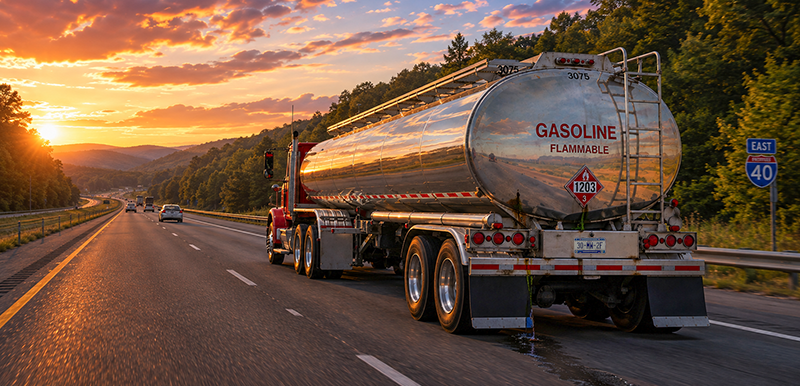
On a recent road trip, I found myself behind one of those big gasoline tankers rolling down the highway. Somewhere along the way, I noticed what looked like a small leak coming from the back of the tank. That’s a hell of a thing to see leaking.
But after staring at it for a few miles, it occurred to me that the tanker and I had some things in common. We both require fuel. We both carry fuel for others. And we both have fuel leaks that we can’t see from the driver’s seat.
You and I live in a fuel-driven ecosystem. Every living thing on this planet depends on some sort of fuel—not just to thrive, but to survive. From the tiniest amoeba to the giant Sequoias, everything gets its energy from somewhere. We’re no different. We need food to fuel our physical existence, and the quality of what we consume makes a difference in how well the machinery runs.
But food is only part of it. We also need intellectual and spiritual fuel to maintain our psyches and souls. And there, too, what we choose to put into the tank matters. Beliefs, conversations, friendships — all of them are fuel.
And, like it or not, human beings are herd animals. Very few of us can flourish completely on our own. We need other human beings rubbing up against us and knocking off the rough edges.
That means we have an obligation to each other — not to be lackeys and blow smoke up each other’s knickers, but to be unflinchingly honest while also being supportive. Our blind spots are called blind spots for a reason.
Sometimes it takes a loyal friend to point out that a bugger is hanging out of our nose…or, that our entire worldview has wandered off the pavement and into the weeds. Not in a judgmental way, but as a trusted collaborator…because we’ve all got hidden flaws.
Whatever good stuff we manage to accumulate — wisdom, patience, faith, compassion — tends to leak out or get polluted by the daily crap we encounter along life’s highway. So, we have to keep getting refilled.
And that raises an important question: Where does our fuel come from?
Who are we listening to? Who are we spending our time with? How critically are we evaluating the ideas that we’re allowing into our tank? Are those things replenishing what gets drained out of us every day, or are they merely contaminating what’s already there?
But there’s another question just as important: Who are we fueling?
That tanker truck doesn’t carry fuel simply for the benefit of the tanker. It’s transporting fuel to where that it’s needed. And you and I aren’t merely consumers of fuel; we’re carrying something other people need as well.
Granted, in the natural world we occasionally become fuel in the most literal sense. Ask any shark, bear or lion whether humans are good eating and they’ll demonstrate their opinion on the spot. Fortunately, most of us will make it through life without becoming lunch. But nobody survives the journey without eventually needing their tank refilled.
If we’re lucky, we may eke out eighty± years here at the top of the food chain. In the end, though, whatever we’ve accumulated gets recycled back into the system. The real question is what we did with it while it was ours.
“Eat, drink, and be merry, for tomorrow we die.” “The one who dies with the most toys wins.” I’ve attended too many funerals in the last few years to buy into either of those concepts.
Maybe our job isn’t simply to keep our own tanks full. Maybe it’s to pay attention to what we’re putting into them, fix the leaks when we become aware of them, and surround ourselves with people willing to tell us when we’re spilling fuel all over the highway.
And perhaps we should routinely look around and ask who else is running on empty. Because the real measure of a life isn’t how much fuel we managed to accumulate, but rather, how much and what quality fuel we delivered to somebody who needed it.
Then again, maybe I’m just another old fart with too many miles on the highway, killing time in his head.

Friendship is unnecessary, like philosophy, like art…. It has no survival value; rather it is one of those things which give value to survival.
— C.S. Lewis
 Let’s talk. I’d really like to hear what you have to say, and it might even give me something to write about. Email me at guy@lawsoncomm.com.
I’ll buy you coffee and we can compare notes. I promise not to steal your ideas without permission.

The Good Life: Lessons from the World’s Longest Scientific Study of Happiness
— Robert Waldinger & Marc Schulz
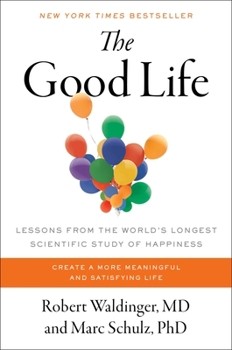
This isn’t a pep talk about feeling better. It’s a book based on the Harvard Study of Adult Development, a research project that’s been going on since 1938. Based on who’s running the research, you probably already guessed this isn’t a spiritually based study, but it has enormous validity. Not surprisingly, they discovered that one single thing above all others, determines our quality of life here on Earth — relationships.

Did someone forward this newsletter to you after reading it themselves? Don’t settle for that!
CLICK HERE
to get a fresh, unused copy of this newsletter sent directly to you every Sunday morning. If you decide it stinks, you can always unsubscribe.
A meeting of great minds who think alike