Pursuits
Pursuits
If you know me, you know I’m a visual thinker. While I can easily conjure up an image to illustrate any marketing concept, there’s a major drawback to my way of “seeing things”. I have difficulty finding stuff.
My wife will testify that I couldn’t find my own ass if it weren’t precisely the same distance from my shoulder as my hand. The issue is that I tend to pre-visualize what I’m looking for and scan my vista for that exact image. Hence, the jar of peanut butter I couldn’t see on the pantry shelf because it wasn’t the brand I expected to find there.
Before you get thinking this is an attempt to excuse my shortcomings, it’s not. This is a story about the difference between pursuit and motivation. It’s about how our personal strengths may be working against our best interests.
A couple years ago, I asked folks in my networking group, what the most important thing in life is. Several of those folks answered, “being happy”. I’m no psychologist, but I could easily see that, of the people who gave that answer, most of them were less than satisfied with their success at attaining that goal.
Additionally, for over forty years, I’ve worked with business owners and CEOs as a provider of marketing services. At least three of those clients were radically dedicated to maximizing profits and growing their businesses. They were also the most dismal failures at corporate culture I’ve ever seen.
Being happy doesn’t seem like a bad pursuit, and making your business profitable seems like a reasonable goal. So, why the disconnect? Are some people just destined to be unhappy? Have others really been promoted to the level of their incompetence?
The happiest people I’ve ever known are people who are not seeking to be happy; they’re people seeking to make others happy or successful. Their personal happiness is simply a biproduct of succeeding at helping others.
The most profitable business leaders I’ve ever met were not those fixated on profits, but those seeking to provide a needed service or product while helping their employees thrived. Profit was a fringe benefit of doing something well.
The solution seems to be simple — focus outward.
But the rub comes when I understand that the individual who has successfully sold me the most lies is, in fact, me. My ability to market ideas has been turned against my best interests. If I convince myself I’m serving other people when I’m really serving me, who can I depend on to remove the distortion magnet from beside my moral compass?
And, if there’s no moral compass stronger than my emotion-based ego, who’s navigating?
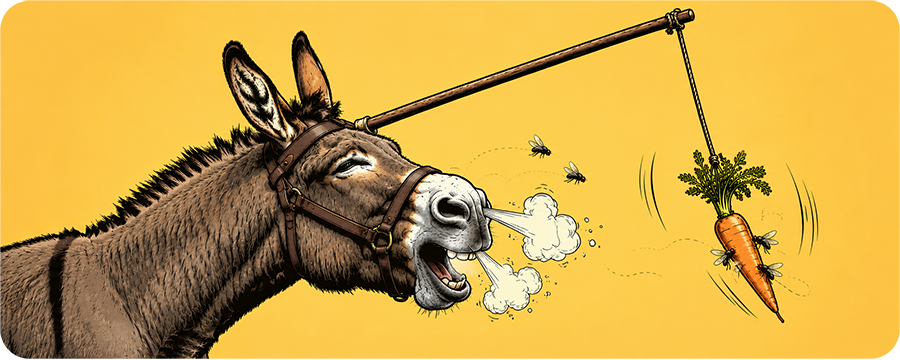
There are horseflies on my carrot and they came from me.
What’s wrong with your carrot?

The emotional tail wags the rational dog.
— Jonathan Haidt,
The Righteous Mind

 Let’s talk. I’d really like to hear what you have to say, and it might even give me something to write about. Email me at guy@lawsoncomm.com.
I’ll buy you coffee and we can compare notes. I promise not to steal your ideas without permission.

Mistakes Were Made (But Not by Me)
— Carol Tavris and Elliot Aronson
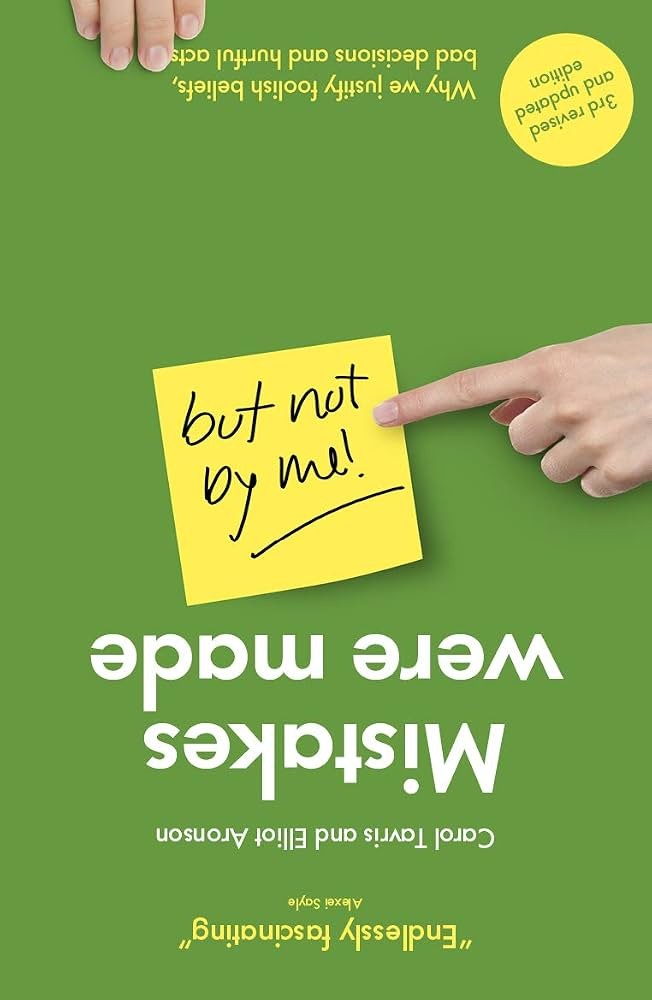
Updated and revised in 2020, this is a great examination of why you and I unconsciously rationalize our beliefs and actions in the face of overwhelming evidence that we’re wrong. It’s filled with good examples and psychology experiments about people clinging to self-justification instead of admitting errors and moving on — not that I would liken that to our current social and cultural dilemma.

Did someone forward this newsletter to you after reading it themselves? Don’t settle for that!
CLICK HERE
to get a fresh, unused copy of this newsletter sent directly to you every Sunday morning. If you decide it stinks, you can always unsubscribe.
A meeting of great minds who think alike